
2/04/2026


Choosing an industrial park in Mexico involves evaluating location, connectivity, infrastructure, availability of services, and, at the same time, its ability to attract and retain talent near the workplace.
The competitiveness provided by an industrial space depends both on the strength of its infrastructure and on the quality of the human capital that operates and manages it.
For this reason, the value of an industrial location is defined not only by its square footage, but also by the labor, urban, and social ecosystem surrounding it.
Industrial Talent as an Investment Criterion
In a context where nearshoring has intensified pressure on industrial corridors, the quality of human capital is becoming an increasingly relevant criterion for investment.
A sustainability study by AMPIP indicates that, by year end 2025, 45% of employees in industrial parks had five or more years of tenure, reflecting greater labor stability and sustained efforts in talent retention.
In addition, 89% of tenants promote social or community impact programs, such as volunteering, education, local partnerships, and sustainable development initiatives, thereby strengthening their relationship with the surrounding environment and their social license to operate.
Together, these indicators show that the value of an industrial park is no longer measured solely by its infrastructure, but also by its ability to support talent, manage long-term relationships, and operate with greater institutional strength.
Social Environment and Operational Stability: Key Factors for Sustaining Industrial Growth
Workers’ quality of life can directly influence companies’ operational continuity.
Factors such as proximity between housing and the workplace, as well as better mobility, safety, services, and accessibility conditions, contribute to a more efficient and stable operation.
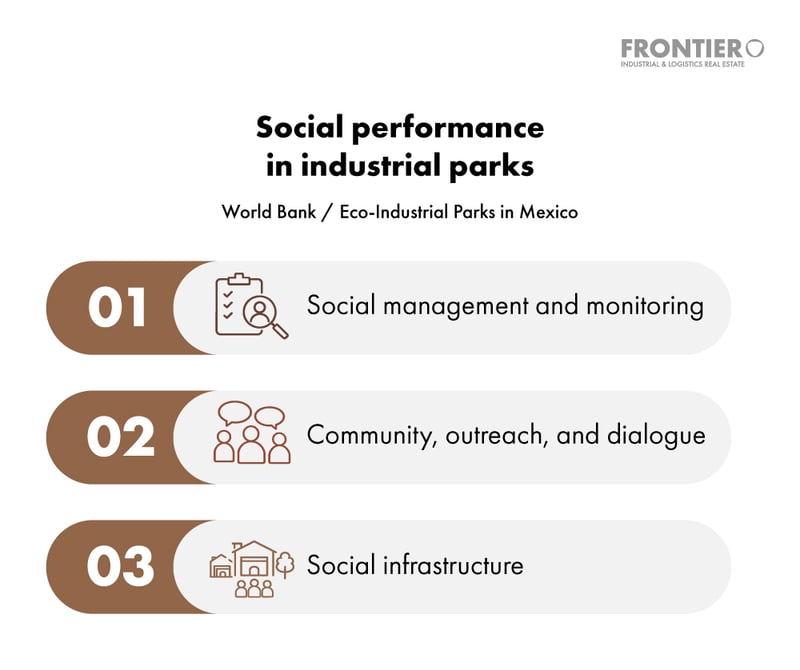
From this perspective, the World Bank’s Eco-Industrial Parks in Mexico document establishes that social performance considers three key areas:
What Is Social Infrastructure?
Social infrastructure is an element that strengthens operations beyond the industrial building itself. It includes proximity to housing, access to services, safety, mobility, accessibility, and integration with the urban context.
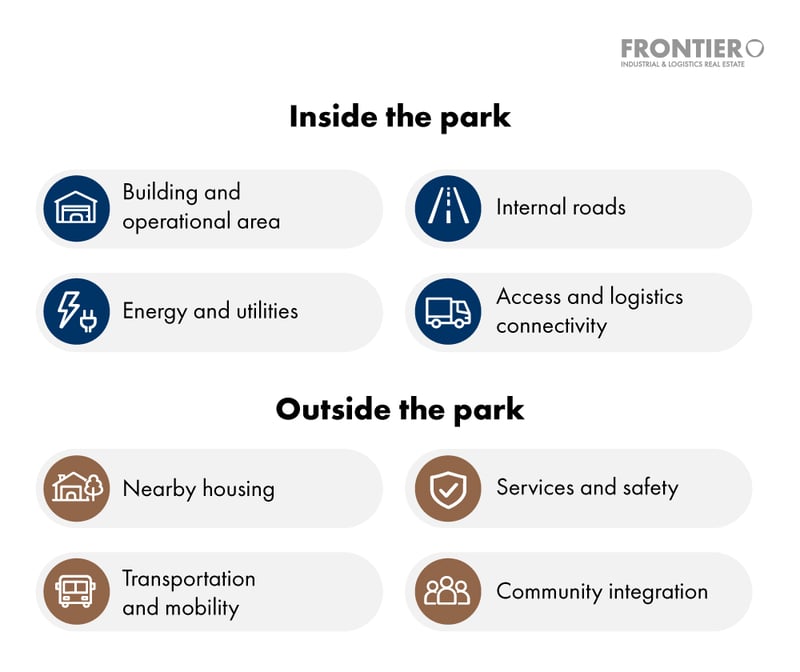
Industrial parks with stronger social management reinforce their territorial integration, improve their ability to attract investment, and create more favorable conditions for operations.
Explore Frontier’s industrial parks in the country’s main corridors, with access to key talent for manufacturing and logistics.
From an operational perspective, this makes it possible to more effectively address the vulnerabilities that often arise when industrial development advances with limited coordination with its surrounding environment.
For this reason, companies looking to expand or relocate operations should include variables such as the following in their analysis:
- Availability of technical and operational talent
- Proximity between employment centers and residential areas
- Mobility and accessibility
- Social environment and territorial integration
- Capacity to sustain business growth
Logistics Connectivity, Human Capital, and a Stable Environment: Where to Find Them Together
The state of Hidalgo combines connectivity to central Mexico, access to talent, and favorable conditions to sustain an industrial operation over time.
The region stands out for its educational base, labor scale, and ability to support greater operational stability:
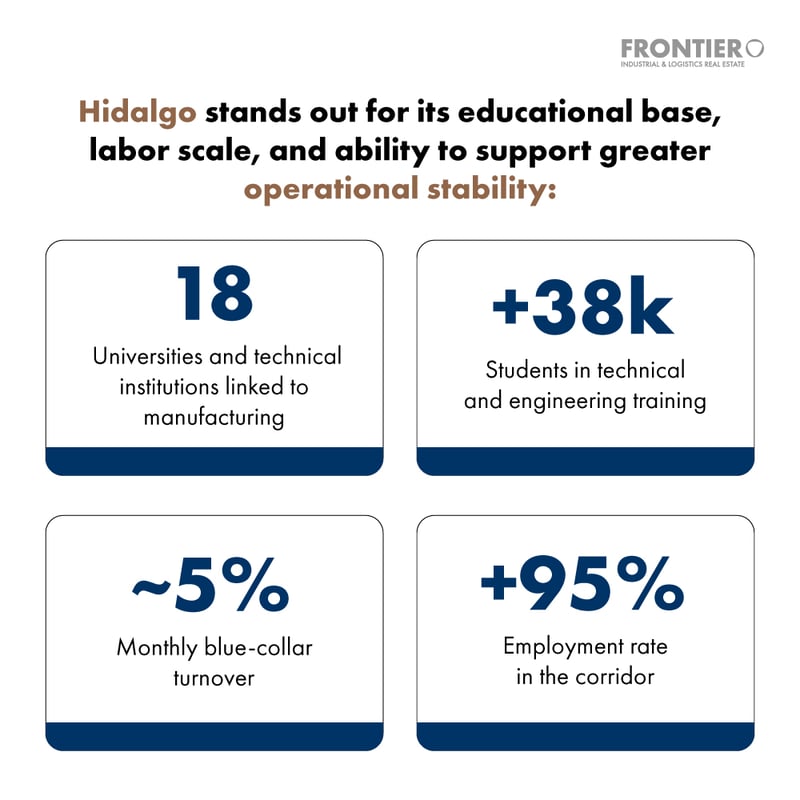
More than a promise of location, these conditions represent a stronger operational foundation to attract, develop, and retain skilled labor.
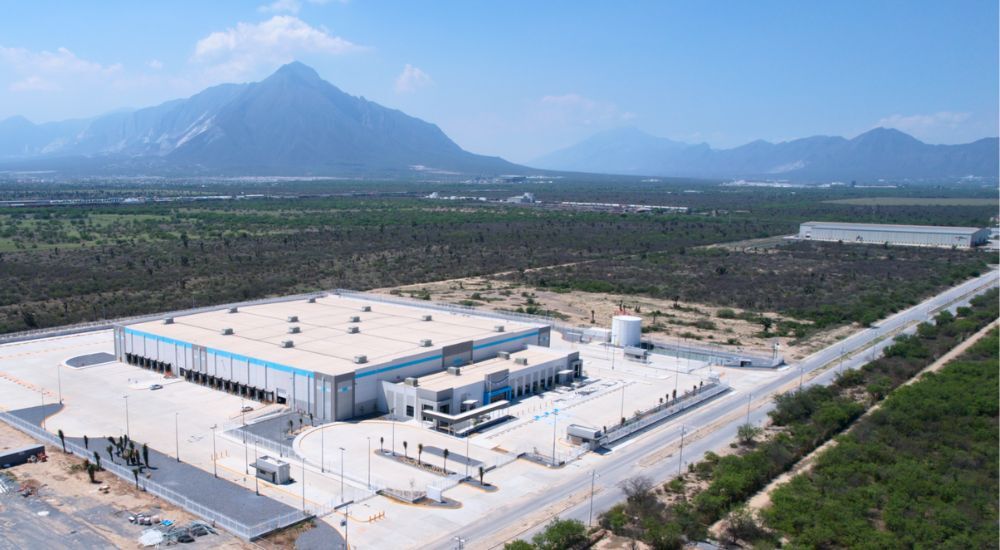
From this perspective, Frontier’s PLATAH-SPEC1 industrial building can be positioned as an asset that offers more than space or connectivity: a location with better conditions to operate with nearby talent and greater long-term certainty.
Contact us so we can help you find the ideal Class A industrial buildings for your operations, with access to top talent and stronger conditions to scale.

You may also be interested in reading more about what an industrial building should offer to support advanced manufacturing and operational growth.

-1.jpg)