27/08/2026


A smart manufacturing factory that integrates IIoT devices, robots, artificial intelligence, and control software also requires a sustainable infrastructure capable of guaranteeing the continuity of its operations over the long term.
Some industrial buildings in Mexico already have the technical conditions, talent, infrastructure, and services needed to support a production model. However, having the technological equipment is not enough.
Sustainability is emerging as one of the main drivers of efficiency in the smart manufacturing industry over the next few years, along with the availability of specialized talent.
What must an industrial building have to operate a smart, sustainable factory?
- 1. Dedicated electrical capacity
- 2. Integrated predictive maintenance
- 3. Efficient water and waste management
- 4. Digital twins to simulate and optimize before operating
- 5. Logistics connectivity that reduces transport footprint
1. Dedicated electrical capacity
A smart factory needs its own substation that doesn't limit its capacity, along with the adoption of real-time energy monitoring practices, where smart systems make it possible to identify consumption by area, detect waste, and adjust energy use based on actual operation, not on estimates.
This visibility is what turns efficiency into measurable savings, and it's already a widespread practice in the sector: according to the AMPIP 2026 Declaration, 93% of industrial corporations already track their energy consumption.
2. Integrated predictive maintenance
Sensors that detect wear before a failure occurs help avoid unplanned downtime, which is the leading cause of material waste on automated lines.
Deloitte documents the case of a plastics manufacturer that implemented a predictive process-anomaly model, with a potential value of $10 million across its plant network and an additional 40,000 pounds of production per year per line, thanks to less waste and less downtime.
3. Efficient water and waste management
A smart factory can consume water for cooling, cleaning, and temperature control, and generate waste constantly due to the continuous nature of its operation.
The same IIoT sensors that monitor electrical consumption can detect leaks and adjust flow rates in real time, reducing both the plant's operating cost and its environmental footprint.
In addition, industrial tenants need the building to let them report consumption, emissions, and efficiency with verifiable data, because their own customers require it of them in order to comply with Environmental, Social, and Governance practices.
What is the adoption level of ESG practices in Mexico's industrial parks?
According to the AMPIP 2026 Declaration
ESG and wellbeing goals
96%
of industrial parks already set environmental, social, governance, or wellbeing goals.
Sustainability certification
85%
hold at least one sustainability standard for their operation.
What share of parks monitor their resources?
|
93% Energy |
89% Water |
67% Waste |
Social impact
89%
run social or community impact programs.
4. Digital twins to simulate and optimize before operating
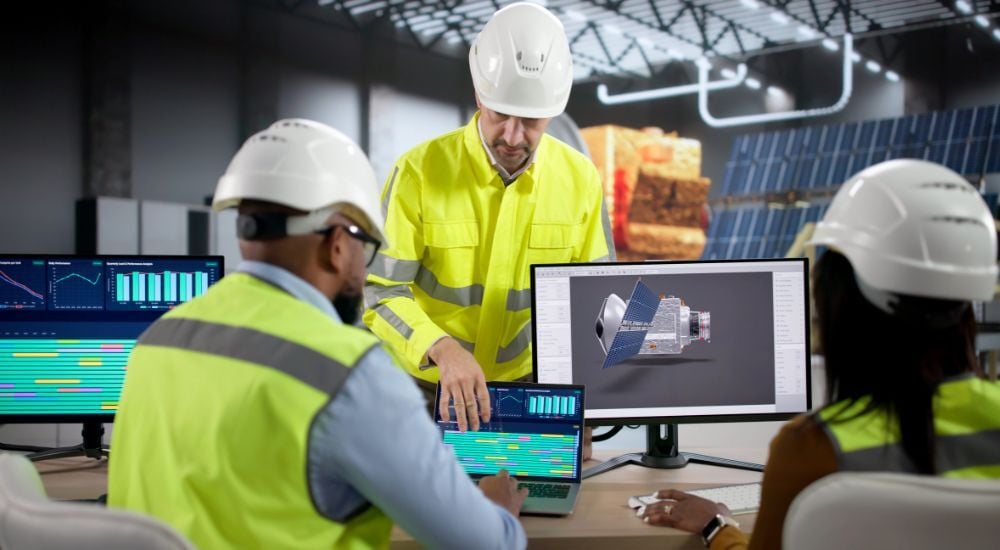
A digital twin connects sensors on real equipment to a digital model that updates in real time, making it possible to detect anomalies, anticipate failures, and find optimization adjustments without having to experiment directly on the production line.
This simulation capability has a direct effect on sustainability: testing configurations in the twin before implementing them avoids the waste of materials and energy that trial and error on the real plant would involve.
It also allows maintenance and support to be provided remotely, which reduces technical staff travel and, with it, the transport footprint tied to operating the building.
5. Logistics connectivity that reduces transport footprint
According to The Logistics World, route optimization is already one of the most direct levers for cutting both costs and carbon footprint across any supply chain.
Achieving it requires sensors on vehicles and maneuvering yards, transportation management systems (TMS) that coordinate route and unit assignment, and algorithms that process variables such as traffic, weather, and demand in real time to dynamically adjust routes.
This technology layer only reaches its full potential when it starts from an already favorable location: a building on strategic corridors cuts the kilometers traveled per unit shipped from the point of origin.
Industrial spaces built for smart, sustainable manufacturing
These conditions already exist in the country's strategic industrial corridors. One example sits in Hidalgo, just 50 minutes from Mexico City, with access to skilled labor and strategic connectivity to the main highways in central Mexico.
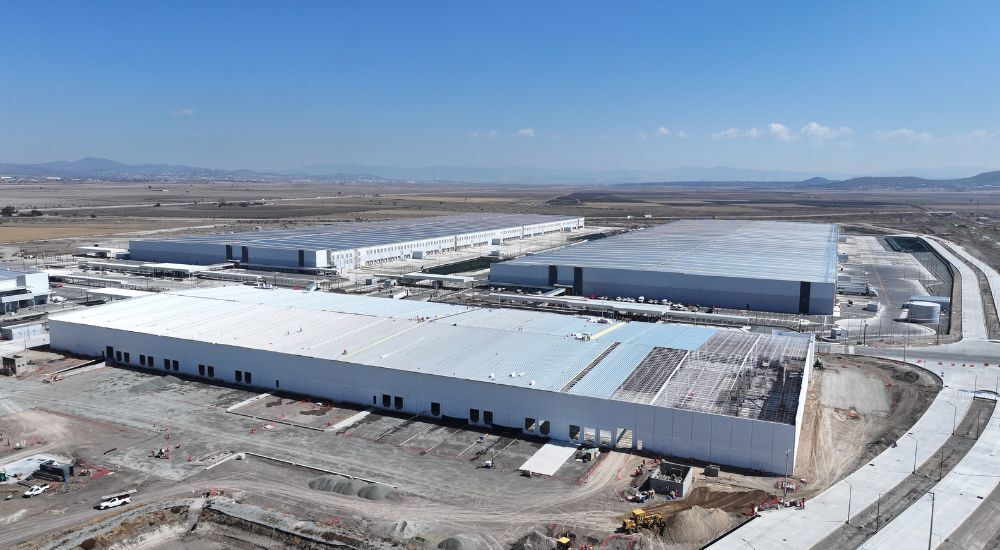
In this setting are spaces with ready-made infrastructure, such as the PLATAH Industrial Park, located in Villa de Tezontepec, one of the most strategic industrial developments in central Mexico.
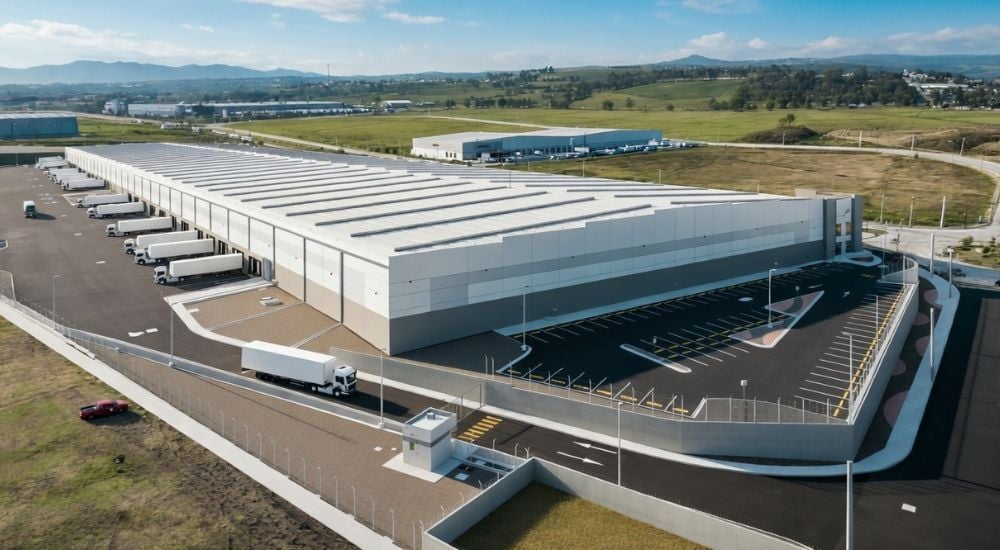
PLATAH-SPEC1 is located here, a Class A industrial building for lease designed to meet the demands of high-performance industrial operations.
Its main advantage isn't just the location: it also has its own electrical substation and dedicated capacity, infrastructure that lets it meet the energy needs of high-demand processes without depending on later expansions.
At Frontier we develop industrial buildings in Mexico with the infrastructure a smart factory needs to operate from day one, with a presence in the main industrial regions of northern, central, and southern Mexico.
If your next automated line requires dedicated electrical capacity, explore our portfolio of industrial buildings for lease in Mexico and schedule a visit with our team.

You might also want to keep reading about what an industrial building should offer to support advanced manufacturing and operational growth